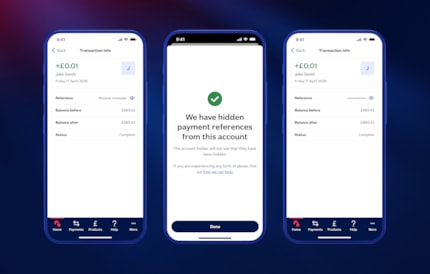
More than 38,000 potentially distressing payment references have been hidden by Nationwide customers since the launch in May of its in-app feature designed to help people experiencing domestic and economic abuse.
The figures come exactly one year after the Government’s Financial Inclusion Strategy set out plans to remove barriers to financial services, with accessibility, mental health and economic abuse identified as significant issues impacting consumers.
UK Finance’s Inclusive Design Challenge is now bringing the industry together around practical action on accessible communications, third-party support and Basic Bank Account access.
Nationwide is highlighting how practical changes to banking can give people greater control, independence and confidence in managing their money, particularly when they are experiencing abuse, disability or other circumstances that can make accessing financial services more difficult.
Since May, customers have been able to hide payment references from specific senders while continuing to receive the payments themselves. Nationwide was the first major high-street banking provider to introduce the feature, which has received more than 800,000 visits, while customers have hidden over 38,000 potentially distressing payment references.
Payment references can be exploited by perpetrators of domestic and economic abuse to send threatening, harassing or coercive messages, including words or locations intended to cause distress, including when other forms of contact have been blocked.
The support has since been extended. In late September, Nationwide launched Online Safe Spaces, giving people discreet digital access to specialist domestic and economic abuse information and support, including a quick-exit function that instantly wipes the browser history.
In its first month, Online Safe Spaces received 2,893 visits, with 645 progressing to information on how to contact Nationwide for further help. This complements the physical Safe Spaces available across more than 430 Nationwide branches and 41 Virgin Money branches.
Removing barriers to banking:
Nationwide is also using the UK Finance challenge to highlight other approaches designed to make financial services easier to access, several of which are already being used more widely across the industry:
- Speak Easy1: Physical cards, first designed by Nationwide, to help make face-to-face banking easier for people with communication difficulties. These have now been adopted by major financial services organisations such as NatWest, Santander and Skipton building society, taking the cards into more than 3,000 UK branches.
- Accessibility2: Launched in March 2026, Nationwide’s AccessAble guides, which offer detailed, visual disabled access guides for each of Nationwide’s 605 branches, have been viewed over 22,000 times. Virgin Money branches will also be live by the end of the year.
- Easy Read3: Guides developed with Mencap, to simplify essential banking information have been downloaded close to 7,000 times since launch in March 2025.
- Deaf customers4: Nationwide-sponsored research found 90 per cent of debt cases among 85 British Sign Language (BSL)-using moneyPLUS clients examined were linked to miscommunication or misunderstanding. The findings are helping drive greater industry focus on accessible communication, with Nationwide providing BSL support online, in branches and across telephony, so deaf customers can access and manage their money more independently.
- Learning disabilities5: Nationwide and Project Nemo research exposed how people who need help managing their money can resort to risky practices such as sharing PINs and passwords. The findings helped build the case for work now being taken forward by the HM Treasury-backed CFIT Coalition6.
Kathryn Townsend, Head of Customer Vulnerability for Nationwide, said: “Inclusive banking is about giving people the confidence, independence and control to manage their money safely. Sometimes relatively simple changes can make a real difference, whether that’s allowing someone experiencing abuse to hide distressing payment references or giving a customer a more accessible and easy way to communicate.
“The UK Finance Inclusive Design Challenge is an opportunity for the industry to come together, share best practice so that we can tackle financial exclusion at pace.”